Understanding Gas Fees: What They Are and How They Apply to Crypto Gift Card Purchases
A practical guide to network fees across Bitcoin, Ethereum, Solana, and the other coins CardsRelay accepts, plus what current 2026 fee levels mean for your purchase.
15 July 2026
If you have ever bought something with cryptocurrency and noticed a small extra charge on top of the price, that was a gas fee. These network costs vary widely between coins, and understanding them helps you pick the cheapest way to pay. This guide explains how gas fees work and looks at current 2026 fee levels across the coins CardsRelay accepts.
What a Gas Fee Actually Is
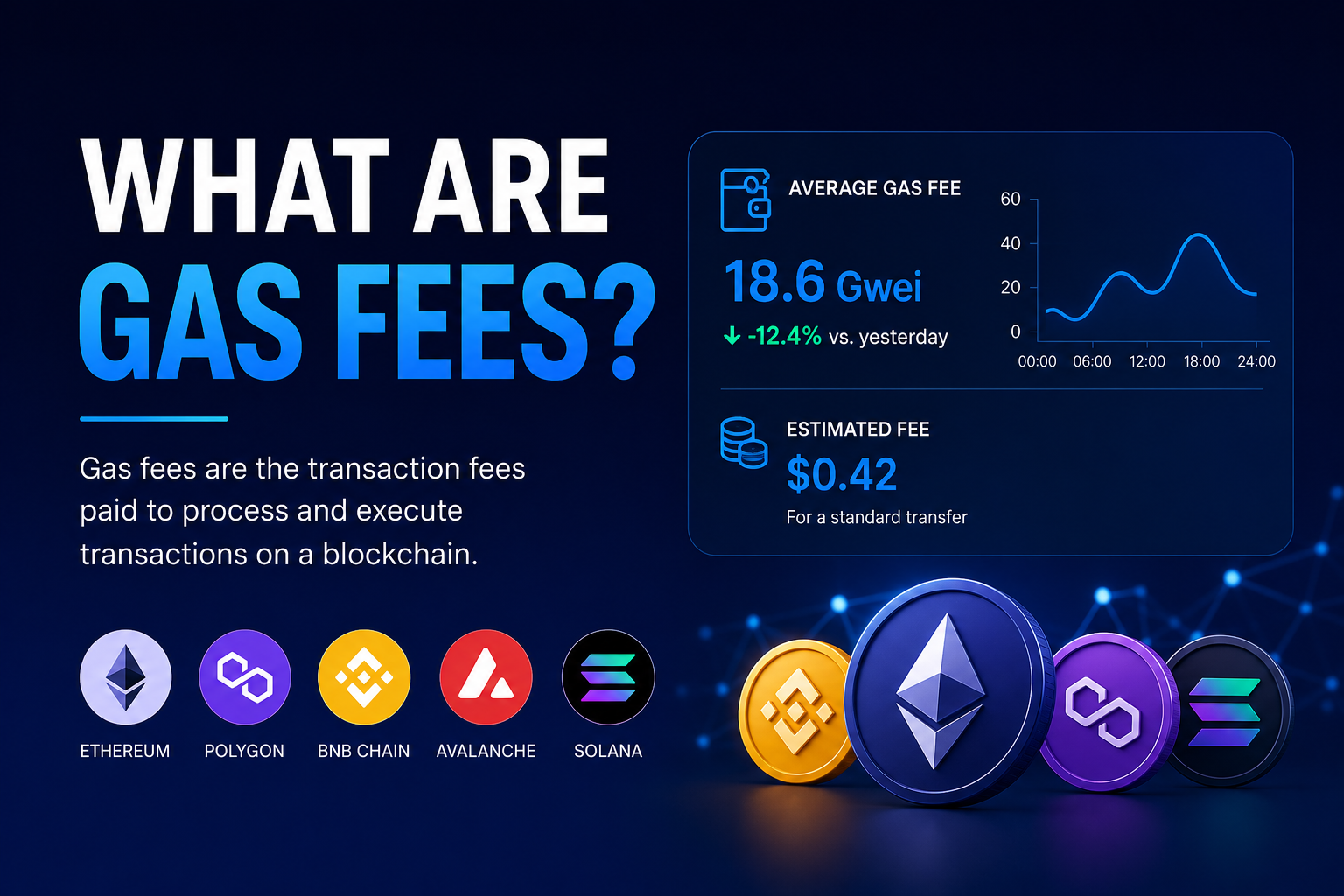
A gas fee is the payment you make to the people who run a cryptocurrency network for processing and confirming your transaction. When you send Bitcoin, Ethereum, or any other coin, thousands of computers verify that transfer and record it permanently. Those operators, often called miners or validators, are rewarded with a small fee taken from each transaction. The term "gas" comes from Ethereum, where it measures the computational work a transaction requires, but the concept applies to every blockchain in some form.
Gas fees are not charged by CardsRelay or any merchant. They are paid directly to the network itself, which is why the amount changes constantly. When a network is busy, users effectively bid against each other for faster confirmation, so fees rise. When traffic is light, fees fall. This is why the same transfer can cost a few pence one hour and several pounds the next. Understanding this distinction matters: the price of your gift card is set by CardsRelay, but the gas fee is a separate cost imposed by the blockchain you choose to pay with.
How Gas Fees Apply When You Pay on CardsRelay
When you buy a gift card on CardsRelay, whether it is an Amazon voucher, an App Store & iTunes card, or a Steam-style gaming top-up, you send the exact crypto amount to a payment address. The gas fee is deducted from your wallet on top of that amount, so you need a small buffer of the same coin to cover it. CardsRelay does not set, receive, or profit from this fee. It goes entirely to the network validators who confirm your payment reaches its destination.
The practical takeaway is that your choice of coin directly affects your total cost. Paying for a low-value mobile top-up with Ethereum during peak congestion could mean a gas fee larger than the card itself. Paying the same amount with Solana, Litecoin, or USDT on Solana might cost a fraction of a penny. Because CardsRelay accepts a broad range of coins, including Monero (XMR), Zano (ZANO), and Zcash (ZEC), which very few digital goods retailers support, you have genuine flexibility to match the payment network to the size of your purchase. For small orders, a low-fee chain almost always makes sense.
Current Gas Fee Levels Across the Coins CardsRelay Accepts
As of early 2026, fee levels vary enormously between the networks CardsRelay supports. Bitcoin (BTC) fees typically range from a few pence to a pound or more per transaction depending on mempool congestion, with real-time data available at mempool.space. Ethereum (ETH) and the ERC-20 tokens on it, including USDC on Ethereum and USDT on Ethereum, remain the most expensive during busy periods, though costs have fallen since earlier network upgrades. You can check live Ethereum gas at etherscan.io/gastracker.
The cheapest options are consistently the high-throughput chains. Solana (SOL), along with USDC on Solana and USDT on Solana, settles transactions for a tiny fraction of a penny, which is why it is popular for smaller transfers. Litecoin (LTC) and Dogecoin (DOGE) also carry very low fees, usually well under a penny. Among the coins CardsRelay accepts that few competitors offer, Monero (XMR), Zano (ZANO), and Zcash (ZEC) each carry modest, stable network fees. Live figures for most of these are available at bitinfocharts.com, which tracks median transaction fees per coin.
Choosing the Right Coin for Your Purchase
The simplest rule is to weigh the gas fee against the value of what you are buying. For a large purchase, such as a Carnival Cruise Lines or Airbnb travel card worth several hundred pounds, the gas fee is negligible whatever coin you use, so pay with whatever you hold. For small everyday buys, like a mobile top-up from one of the 700+ operators CardsRelay lists, or a modest Google Play or gaming card, a low-fee network keeps costs sensible.
My general guidance for 2026 is to reach for Solana, Litecoin, Dogecoin, or USDT on Solana when the order is small, since their fees rarely move the total. Reserve Bitcoin and Ethereum for larger orders where the fixed fee is trivial relative to the card value, or check a live tracker first if the networks are quiet. Because CardsRelay supports so many chains, you are never locked into an expensive option. Keep a small reserve of your chosen coin in your wallet to cover gas, confirm the current fee before sending, and you will always pay close to the true price of the card.
Ready to spend your crypto?
Browse Gift Cards